
Grade 12 Chemistry Tutoring Program
Grade 12 Chemistry tutoring program helps students master advanced chemistry concepts while developing strong analytical, problem-solving, and critical-thinking skills. Whether your child needs help with equilibrium, thermodynamics, or preparing for university-level chemistry, our certified tutors provide personalized guidance to ensure success and confidence.
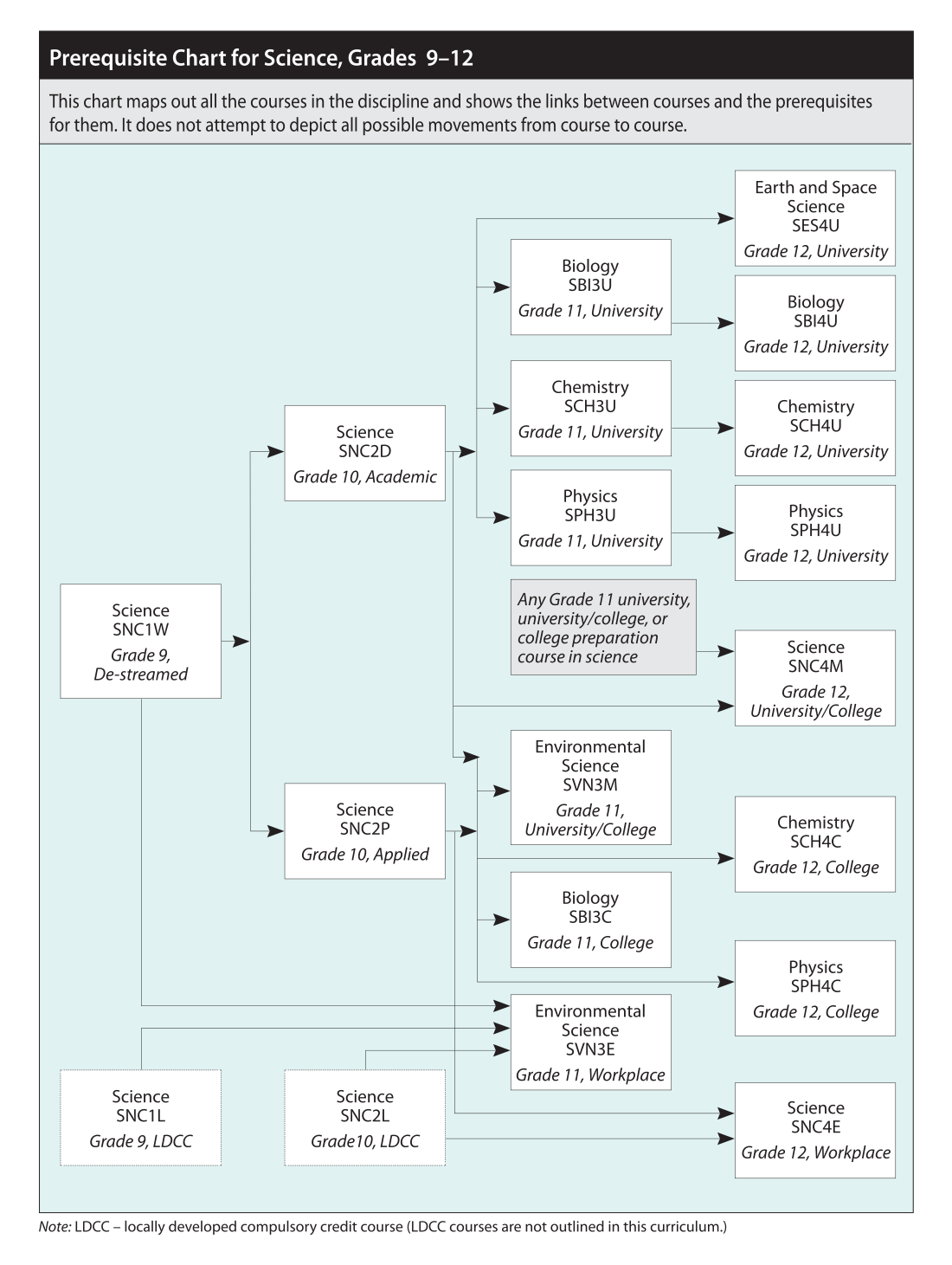
Following the Ontario curriculum, our lessons focus on conceptual understanding, practical applications, and effective test-taking strategies. Through clear explanations, practice questions, and continuous feedback, students are well-prepared for labs, tests, and post-secondary studies.
Students can attend sessions in person at our North York location in at Bayview and Steeles close to German Mills and HillCrest neighbourhoods or join online for added flexibility.
Course Outline – SCH4U
Unit 1: Organic Chemistry
- Structure and naming of organic compounds
- Functional groups and their properties
- Chemical reactions of organic compounds
- Isomerism and structure-property relationships
- Applications of organic chemistry in everyday life
Unit 2: Structure and Properties of Matter
- Atomic structure and quantum mechanical theory
- Electron configurations and orbital theory
- Periodic trends and chemical bonding
- Intermolecular forces and their effects on physical properties
- Molecular geometry and polarity
Unit 3: Energy Changes and Rates of Reaction
- Energy changes in chemical reactions
- Calorimetry and energy calculations
- Factors affecting reaction rates
- Collision theory and activation energy
- Introduction to reaction rate laws and kinetics
Unit 4: Chemical Systems and Equilibrium
- Reversible reactions and dynamic equilibrium
- Equilibrium constants (Kc, Ka, Kb)
- Le Châtelier’s Principle and predicting shifts in equilibrium
- Acid-base equilibria and pH calculations
- Applications of equilibrium in natural and industrial systems
Unit 5: Electrochemistry
- Oxidation-reduction (redox) reactions
- Electrochemical cells (galvanic and electrolytic)
- Standard reduction potentials and predicting spontaneity
- Electrolysis and Faraday’s laws
- Real-world applications
What’s Included
Comprehensive study notes and practice materials
Step-by-step concept reviews and problem-solving guidance
Regular unit reviews and progress updates
Homework help and exam preparation
Flexible in-person and online learning options